


Jaipur | August 29, 2026
A disruption during the All India AYUSH Post Graduate Entrance Test (AIAPGET) 2026 at an examination centre in Jaipur has left 49 candidates scheduled to appear for a fresh examination after they were unable to complete the computer-based test because of a power failure.
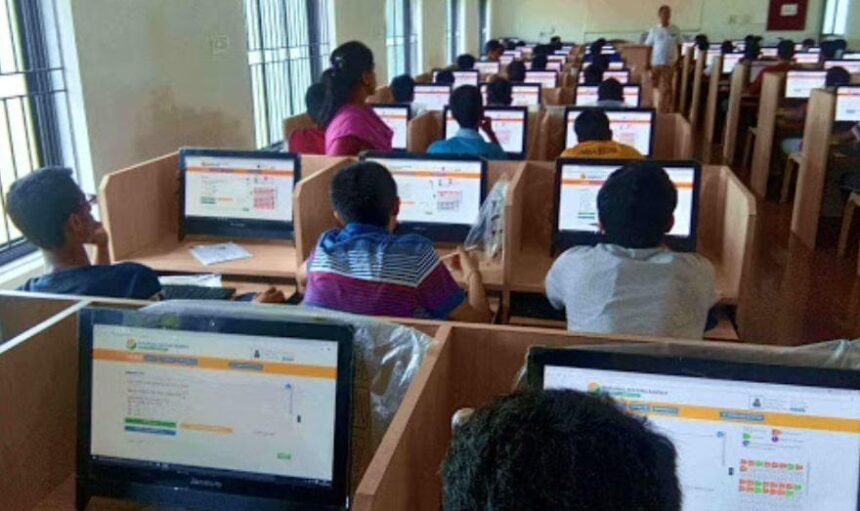
The incident occurred on August 22 at Shri Satya Sai PG College in Transport Nagar, Jaipur, where 192 candidates were appearing for the examination. According to the National Testing Agency (NTA), 49 candidates could not complete their examination following the disruption.
The incident has subsequently raised broader questions about contingency arrangements at high-stakes computer-based examinations, while reports from the centre have also included allegations of irregularities during the period of disruption.

What happened at the Jaipur centre?
AIAPGET 2026 was conducted nationally on August 22. NTA’s figures show that 36,979 candidates were registered for Shift I, with 35,837 appearing across 200 examination centres. The examination was completed for 35,788 candidates.
At the Shri Satya Sai PG College centre in Jaipur, however, the examination was disrupted by a power failure. Of the 192 candidates appearing at that centre, 49 were unable to complete the examination. NTA attributed the power-related lapse to M/s Eduquity Career Technologies Private Limited, the examination-conducting agency.
The disruption occurred during the computer-based examination, meaning that affected candidates could not simply continue answering questions while the systems were unavailable.
According to reports from candidates, the power interruption lasted long enough to disrupt the examination process and led to confusion at the centre. Some candidates reportedly left their computers or the examination area while the situation was being addressed.
Allegations of copying during the disruption
The power failure was not the only issue that attracted attention.
Some candidates alleged that during the disruption, certain students were talking to each other and sharing answers. Reports also quoted candidates as claiming that such activity took place while examination personnel were present.
These allegations are important, but they should not be treated as established facts unless they are confirmed through an official investigation.
At this stage, what is officially established is that the examination was disrupted and that NTA subsequently ordered a re-examination for the candidates who could not complete the test.
The allegations nevertheless raise a serious question about how examination centres should maintain testing conditions when technical infrastructure fails.
In a competitive postgraduate entrance examination, even a short period without proper examination controls can potentially affect candidates differently. Those who continue working under normal conditions and those who experience a prolonged interruption may not have comparable examination experiences.
NTA takes action against examination agency
Following the incident, NTA took action against the examination-conducting agency.
The agency said that M/s Eduquity Career Technologies Private Limited’s empanelment with NTA was suspended with immediate effect, pending resolution of a show-cause notice issued over lapses in the conduct of the examination at the centre.
This is significant because the incident was not treated merely as an individual candidate grievance.
The NTA’s action indicates that the agency considered the centre-level disruption serious enough to warrant scrutiny of the examination service provider’s role.
However, the suspension should not automatically be interpreted as a final finding of misconduct. A show-cause process is intended to allow the concerned agency to respond to allegations or identified lapses before a final determination is made.
Why only 49 candidates are appearing for the re-examination
One question being discussed among candidates is why the entire examination was not cancelled when the centre experienced a technical disruption.
The answer lies in the nature and extent of the disruption.
According to NTA, 192 candidates appeared at the Jaipur centre, while 49 candidates were unable to complete the examination. The remaining candidates completed their test. Therefore, NTA has ordered a re-examination specifically for those affected candidates rather than cancelling the examination nationwide.
This approach attempts to balance two competing concerns.
On one side is the need to provide a fair opportunity to candidates who were genuinely disadvantaged by circumstances beyond their control.
On the other is the need to avoid unnecessarily cancelling an examination that thousands of candidates across the country successfully completed.
Re-examination scheduled for September 1
NTA has scheduled the re-examination for the affected candidates on September 1, 2026, from 10:00 AM onwards.
The re-examination is being conducted at Rajasthan College of Engineering for Women, Jaipur, according to the NTA notice. Affected candidates are being issued revised admit cards containing the relevant examination details. (National Testing Agency)
NTA has also expressed regret for the inconvenience caused to candidates affected by the disruption.
As of August 29, NTA has issued a further notice concerning the release of admit cards for the 49 affected candidates. (National Testing Agency)
Candidates appearing for the re-examination should therefore rely on their revised NTA admit card for the final reporting instructions and centre details.
The larger issue: reliability of computer-based examinations
The Jaipur incident highlights an increasingly important issue in India’s examination ecosystem: the reliability of the infrastructure supporting computer-based testing.
Computer-based examinations depend on several systems functioning simultaneously, including electricity, backup power, computer terminals, servers or network infrastructure, examination software, surveillance equipment and personnel.
A failure in any one of these components can potentially disrupt the examination experience.
For candidates preparing for months or even years for postgraduate entrance examinations, such disruptions can have consequences extending beyond the examination hall.
This is particularly relevant for AIAPGET, which is used for admission to postgraduate programmes in Ayurveda, Unani, Siddha and Homoeopathy. (NTA Exams)
Should there have been stronger backup arrangements?
The Jaipur incident naturally raises questions about whether examination centres should have sufficiently robust contingency systems.
A modern computer-based examination centre would ordinarily be expected to have backup arrangements for essential infrastructure. But the effectiveness of a backup system depends not simply on whether equipment exists, but whether it can immediately take over when the primary system fails.
Questions that may deserve examination include:
- Was sufficient backup power available at the centre?
- How quickly could the backup system be activated?
- Were all computer terminals connected to the backup supply?
- What procedures were followed once the examination was disrupted?
- How was additional examination time determined?
- How were candidates monitored during the disruption?
- Were all candidates affected equally?
- Were examination logs and CCTV footage preserved for review?
These questions are particularly relevant because the incident also generated allegations concerning candidate conduct during the disruption.
What happens to the 49 candidates now?
For the affected candidates, the immediate priority is the September 1 re-examination.
The fresh examination provides them with an opportunity to complete the entrance test under a new examination arrangement rather than being disadvantaged by the August 22 disruption.
However, candidates may understandably have concerns about whether their re-examination experience will be comparable with the original examination.
The integrity of the process will therefore depend on the examination being conducted under strict and uniform conditions.
NTA has stated that revised admit cards will provide further information to the affected candidates.
A problem bigger than one examination centre
The Jaipur incident should not automatically be characterised as evidence that the entire AIAPGET examination was compromised.
The available official information points to a specific centre-level disruption affecting 49 candidates.
At the same time, the incident demonstrates why high-stakes examinations require strong contingency planning.
For thousands of aspirants, an entrance examination is not simply another test. A few marks can influence a candidate’s rank, counselling options, choice of speciality and ultimately their postgraduate career.
When an examination is conducted digitally, infrastructure reliability becomes part of examination fairness.
The response to the Jaipur incident will therefore be closely watched not only by the 49 affected candidates but also by the wider AYUSH student community.
What remains unanswered?
While NTA has announced the re-examination and taken action against the examination agency, several questions remain relevant.
The most important is whether the technical failure was solely an infrastructure problem or whether deficiencies in contingency planning contributed to the disruption.
There is also the question of the allegations made by some candidates regarding communication or sharing of answers during the power outage.
Those allegations require evidence-based examination rather than conclusions based solely on social-media posts or individual accounts.
If an investigation establishes that examination rules were violated, appropriate action would be expected. If the allegations cannot be substantiated, affected candidates should not be unfairly labelled.
That distinction is essential when reporting examination controversies.
What this incident tells us
The AIAPGET Jaipur disruption is ultimately a reminder that examination fairness extends beyond the question paper itself.
A fair examination requires reliable infrastructure, effective invigilation, appropriate backup systems, transparent incident management and equal treatment of candidates.
The decision to provide a separate examination to the 49 candidates is intended to restore that opportunity after the original test could not be completed.
Whether the September 1 re-examination resolves the concerns surrounding the incident will depend on how transparently and effectively it is conducted.
For now, the focus remains on the 49 candidates who have been given another opportunity to complete one of the most important examinations of their academic careers.
Key facts at a glance
| Detail | Information |
|---|---|
| Examination | AIAPGET 2026 |
| Original examination | August 22, 2026 |
| Affected centre | Shri Satya Sai PG College, Jaipur |
| Candidates at centre | 192 |
| Candidates unable to complete | 49 |
| Main reported disruption | Power failure |
| Examination authority | National Testing Agency (NTA) |
| Conducting agency named by NTA | Eduquity Career Technologies Pvt. Ltd. |
| NTA action | Empanelment suspended + show-cause notice |
| Re-examination | September 1, 2026 |
| Re-examination time | 10:00 AM onwards |
| Re-examination venue | Rajasthan College of Engineering for Women, Jaipur |
The figures and re-examination arrangements above are based primarily on NTA’s notices and corroborating reports.
Editorial note: Reports have described allegations of copying/sharing answers during the power disruption. Universal Times Magazine should present these as allegations, not as established cheating, unless an official investigation confirms them. This distinction is particularly important for an independent publication.
Sources: NTA’s official AIAPGET portal and public notice, along with reports from Indian Express, Times of India, Careers360 and other outlets. (NTA Exams)